
 EN
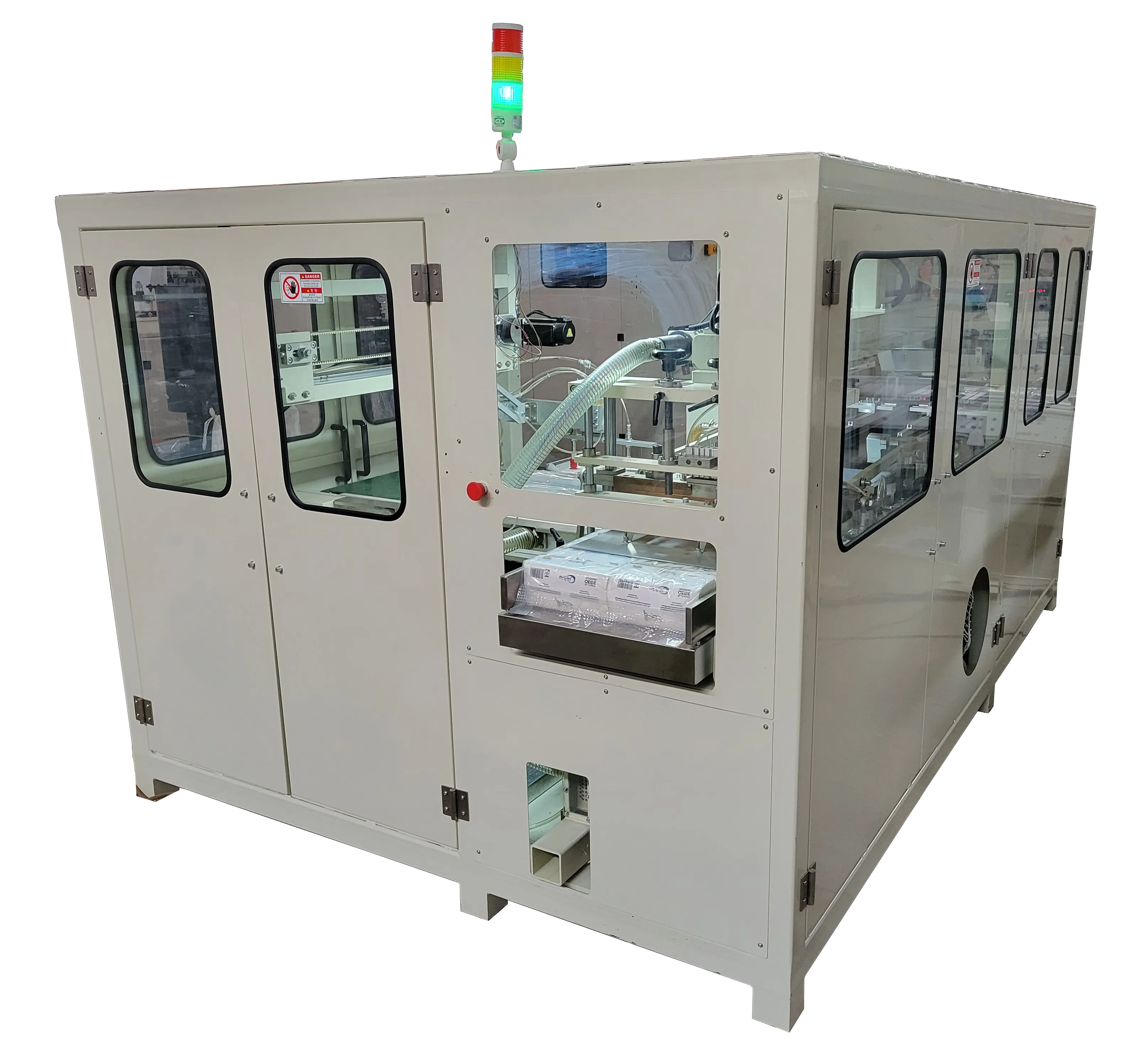
Core Mechanical Simplicity: Fewer Components, Faster Diagnostics
Modular Drive Train and Reduced Moving Parts Cut Diagnostic Time by 40%
A semiautomatic facial tissue machine thrives on mechanical simplicity. Its modular drive train isolates each functional unit—unwinding, folding, cutting, stacking—so operators can inspect, test, or replace modules independently. Unlike densely integrated automatic systems where a single fault triggers cascading alarms, this design reduces ambiguity: fewer moving parts mean fewer failure points and no software logs to interpret. Technicians can often remove a suspect module, bench-test it, and swap in a spare—all without specialized tools. This clarity slashes diagnostic time by up to 40% compared to conventional machines. Wear items like bearings and belts are visibly accessible, and the layout itself serves as a real-time condition report—enabling predictable, fast repairs and minimizing unplanned downtime.
Direct-Coupled Gearbox and Belt-Driven Roll Feed Eliminate Sensor/PLC Dependencies
The machine replaces electronic complexity with direct mechanical action. A direct-coupled gearbox transfers power from motor to main shaft without clutches or servo feedback loops; the belt-driven roll feed relies on pulley ratios and tension—not encoders or PLC-controlled speed matching. When synchronization falters, the cause is physical: a loose belt, worn pulley, or misaligned roller—not a firmware bug or sensor drift. Maintenance requires no proprietary panels, programming interfaces, or automation specialists—just visual inspection and basic mechanical skill. This eliminates failure modes tied to dust, vibration, and temperature fluctuations common in tissue converting environments. Jams stop mechanically and reveal their origin at the point of obstruction, turning troubleshooting into an act of observation rather than interpretation.
Real-World Repair Efficiency of the Semiautomatic Facial Tissue Machine
2.3-Hour Average Downtime vs. Fully Automatic Machines (2023 APAC Service Benchmark)
Field data from the 2023 APAC Service Benchmark confirms that mechanical simplicity delivers measurable repair efficiency: the average downtime per incident is just 2.3 hours—less than half the 5.8 hours typical for fully automatic counterparts. This gap stems directly from the modular drive train and direct-coupled gearbox, which eliminate the sensor and PLC dependencies that delay diagnosis and resolution. Technicians identify root causes through visible inspection—not error-code decoding—resulting in faster interventions and consistent uptime.
| Machine Type | Average Downtime (hours) | Typical Repair Cost (USD) | Required Technician Level |
|---|---|---|---|
| Semiautomatic | 2.3 | $150–$300 | Basic mechanical |
| Fully Automatic | 5.8 | $800–$1,200 | PLC/electrical specialist |
This lower downtime also mitigates production loss: a line producing 150 packs per minute saves over 500 packs per hour of interruption. The front-accessible modular gearbox and drive train allow full component swaps in under 30 minutes—no calibration tools required.
Low-Cost Maintenance and Technician-Friendly DIY Serviceability
The semiautomatic design shifts maintenance from dependency to autonomy. With no PLC programming, servo tuning, or proprietary diagnostics, in-house mechanical technicians handle most service tasks—avoiding costly specialist dispatches. Standard belts, bearings, and gears are widely available from local suppliers, keeping parts costs low and lead times short. Routine tasks—roller cleaning, belt tensioning, lubrication—are operator-performed, further reducing total cost of ownership. As confirmed by the 2023 APAC Service Benchmark, average repair costs range from $150 to $300, compared to $800–$1,200 for fully automatic units—a difference rooted not in part pricing alone, but in the elimination of system-level complexity.
Reliability Without Complexity: Durability Anchored in Minimalist Design
12-Year MTBF in Core Transmission Systems — Field Data from 147 Facilities
Minimalist design delivers exceptional durability. By removing nonessential components from the core transmission system—especially sensors, PLCs, and servo actuators—the machine reduces failure vectors and enables predictable wear patterns. Field data from 147 facilities worldwide shows a 12-year mean time between failures (MTBF) for the core transmission system (2023). This longevity arises from robust, purpose-built mechanics: hardened steel spindles, oversized bearings, and a direct-coupled gear train engineered for high-cycle folding. Operators report decades of consistent performance with only routine lubrication and tension adjustments required. Durability here isn’t achieved through redundancy—it’s built into the discipline of omitting what doesn’t need to be there.
Balancing Simplicity and Performance: Consistent Output Quality in Semiautomatic Facial Tissue Machines
A semiautomatic facial tissue machine proves that simplicity need not compromise quality. Human oversight governs critical variables—folding tension, embossing pressure, sheet alignment—while the machine handles repetitive actions like cutting and stacking with steady mechanical precision. Direct-drive rollers and belt-fed registration maintain tight tolerances without sensor-dependent feedback loops, ensuring uniform sheet dimensions, softness, and fold integrity across every run. Because mechanical drift is gradual and visible—and not masked by compensating algorithms—operators detect and correct subtle variations before they affect output. The result is long-term consistency: tissue packs that meet stringent quality standards year after year, without the calibration creep common in highly automated systems.
FAQ
What is the advantage of modular drive trains in semiautomatic machines?
Modular drive trains allow operators to isolate and repair individual units such as unwinding, folding, and cutting without affecting other components, reducing diagnostic time and complexity.
How does mechanical simplicity improve maintenance efficiency?
Mechanical simplicity eliminates sensor and PLC dependencies, enabling technicians to diagnose issues visually and conduct repairs using basic tools instead of specialized automation equipment.
What are the cost advantages of semiautomatic facial tissue machines?
Semiautomatic machines have lower repair costs ($150–$300 compared to $800–$1,200 for automatic machines) due to reduced complexity and the use of widely available standard components.
How do semiautomatic machines ensure consistent tissue quality?
Critical variables like folding tension and sheet alignment are manually monitored, while repetitive tasks are handled with mechanical precision, ensuring uniformity without relying on software algorithms.
What is the average downtime and durability of semiautomatic facial tissue machines?
Semiautomatic machines boast a 2.3-hour average downtime per incident and a 12-year mean time between failures (MTBF) for core transmission systems, making them highly reliable.
Table of Contents
- Core Mechanical Simplicity: Fewer Components, Faster Diagnostics
- Real-World Repair Efficiency of the Semiautomatic Facial Tissue Machine
- Reliability Without Complexity: Durability Anchored in Minimalist Design
- Balancing Simplicity and Performance: Consistent Output Quality in Semiautomatic Facial Tissue Machines
-
FAQ
- What is the advantage of modular drive trains in semiautomatic machines?
- How does mechanical simplicity improve maintenance efficiency?
- What are the cost advantages of semiautomatic facial tissue machines?
- How do semiautomatic machines ensure consistent tissue quality?
- What is the average downtime and durability of semiautomatic facial tissue machines?
