
 EN
The Aesthetic and Perceptual Impact of Embossing on Paper Serviettes
Visual Depth and Tactile Luxury: How Micro-Relief Enhances Premium Perception
Embossing transforms a flat paper surface into a three-dimensional canvas, creating micro-relief patterns that catch light and invite touch. Raised areas generate subtle shadow lines, lending visual depth to even a simple white napkin and elevating its perceived sophistication. Equally powerful is the tactile response: fingertips register the pattern instantly—signalling quality before the napkin is unfolded. This dual sensory engagement activates a perception of luxury that flat-printed alternatives cannot replicate. Premium hospitality venues leverage this effect deliberately; a finely engraved monogram or floral motif conveys exclusivity and meticulous attention to detail. Because embossing uses no ink, it remains food-safe and aligns with clean-label, eco-conscious aesthetics. The contrast between embossed and smooth zones also creates a “haptic pause”—a moment of physical discovery that strengthens brand recall. Research confirms multi-sensory experiences increase perceived value, and embossed napkins consistently rank higher in consumer preference tests for premium events. By selecting pattern geometry thoughtfully—soft linen-like textures for fine dining, bold geometrics for contemporary settings—producers can calibrate the tactile signature to match venue identity. This synergy of sight and touch makes embossing a subtle but decisive differentiator in premium paper serviette perception.
Real-World Validation: 32% Uplift in Customer Quality Ratings After Embossing Adoption
A 2022 study across 120 premium hospitality venues found a 32% increase in overall quality ratings after introducing embossed napkins—a shift directly tied to customers’ association of tactile richness with elevated service standards. This outcome was enabled by upgrading to modern paper serviette making machines equipped with high-precision rotary embossing. Unlike manual methods, these systems allow rapid, tool-free switching between delicate lace-style motifs for weddings and crisp geometric patterns for corporate events—all while maintaining dimensional stability at thin basis weights (18–24 gsm). One leading producer recouped the machine investment within 14 months, supported by a sustained 15–20% price premium on embossed lines. Field audits further confirmed reduced complaints about flimsiness: embossing subtly increases surface stiffness without compromising drape. This real-world correlation underscores how advanced production capability translates directly into measurable gains in customer perception and commercial performance.
Material Science Behind Effective Embossing: Selecting the Right Paper for Serviette Applications
Optimal Basis Weight and Fiber Structure: Why 18–24 gsm Bleached Kraft Delivers Crisp, Durable Emboss Retention
Precise emboss definition begins with substrate selection. Bleached kraft paper in the 18–24 gsm range offers an optimal fiber architecture: long-fiber softwood delivers tensile strength to withstand high-speed conversion on a paper serviette making machine, while short-fiber hardwood ensures a smooth, fine-pored surface capable of capturing every micro-detail of the embossing die. Its uniform caliper profile enables consistent pressure application across embossing cylinders—critical for sharp, repeatable motifs. Bleaching removes lignin, enhancing fiber bonding and brightness to heighten visual contrast between raised and flat areas. This grammage strikes a functional balance: sufficient rigidity to retain relief height through folding and stacking, yet enough pliability for a soft, cloth-like hand. Below 18 gsm, risk of fiber thinning and punch-through rises; above 24 gsm, fine detail blunts, diminishing the luxurious tactile effect. The interlocked fiber network also resists delamination when moist—preserving emboss integrity during use—while the lightweight stock supports higher roll counts per pallet, lowering logistics costs without diluting perceived value.
Balancing Absorbency and Surface Integrity: Avoiding Crushed Fibers or Wicking Distortion in Embossed Zones
Effective embossing must preserve the napkin’s core function: controlled, uniform absorbency. Over-compression crushes the fiber matrix, creating thin spots that act as preferential wicking channels—distorting the pattern, reducing strength, and causing unsightly wet bands. To prevent this, embossing depth and die geometry must align precisely with the paper’s compressibility curve. For 18–24 gsm bleached kraft, linear load settings typically range from 15 to 25 N/cm—enough to lock in micro-relief without collapsing internal void space. Insufficient pressure yields shallow impressions that flatten during folding. Internal sizing also plays a key role: moderate hydrophobicity prevents embossed indentations from becoming capillary pathways, ensuring even moisture spread. Leading paper serviette making machines address this with closed-loop gap control that adjusts in real time—preserving surface integrity while enabling fast changeovers. This precision is essential in commercial settings, where napkins must withstand repeated use without losing shape or staining unevenly. When implemented correctly, such control raises embossed product yield above 99%, minimising waste and guaranteeing consistent brand presentation.
Seamless Integration into Production: Embossing Solutions for Modern Paper Serviette Making Machines
From Manual Stylus to Precision Rotary Dies: Matching Embossing Method to Output Volume and Consistency Needs
Traditional manual stylus embossing suits low-volume or artisanal runs but introduces operator-dependent variability in pressure and alignment—limiting repeatability and scalability. For consistent, high-output production, precision rotary dies—configured as steel-to-rubber or steel-to-steel—are the standard. These systems deliver uniform micro-relief across thousands of units per hour, forming the technical foundation for crisp, durable patterns that define premium perception. The choice hinges on throughput needs: small-batch operations may accept slower, hand-guided tools, but mid- to high-volume producers require engraved rotary cylinders to ensure emboss fidelity without the crushed fibers or wicking distortion common with inconsistent manual pressure.
Automated Embossing Modules on Mid-Range Paper Serviette Making Machines — Capabilities, ROI, and Setup Considerations
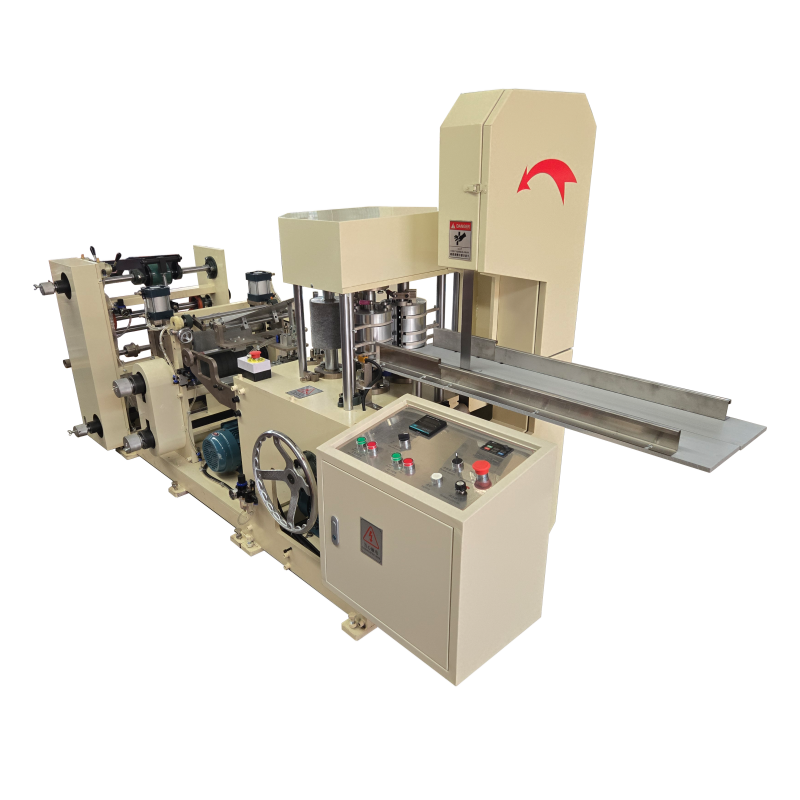
Automated embossing modules on mid-range paper serviette making machines integrate digital pressure controls, independent tension management, and quick-change die systems. Automation reduces labour-intensive changeovers from hours to minutes, while closed-loop alignment minimises registration errors and paper breakage. Typical payback periods fall between 12–18 months, driven by scrap reduction (often below 1.5%), lower labour cost per unit, and the ability to run premium lines without extensive retooling. Key setup considerations include synchronising the unwinder’s pneumatic tension system with the embossing unit’s servo drives and ensuring the control interface supports recipe storage for multiple patterns. A well-integrated module transforms a standard converting line into a flexible, high-quality production cell—capable of delivering differentiated, sensorially rich napkins at scale.
FAQ Section
What is embossing and how does it enhance paper serviettes?
Embossing is a technique that creates raised patterns on the surface of paper serviettes, adding visual depth and tactile luxury that enhances their premium perception.
Why is bleached kraft paper optimal for embossed serviettes?
Bleached kraft paper offers an ideal combination of strength, smoothness, and brightness, enabling crisp retention of embossed patterns while remaining durable.
How does embossing improve customer perception in hospitality venues?
Embossing adds tactile and visual richness that customers often associate with higher service standards, contributing to improved quality ratings in premium settings.
What are the benefits of automated embossing modules?
Automated embossing modules ensure consistent quality, reduce labor-intensive changeovers, minimize waste, and support scalable premium serviette production.
What production methods are best suited for embossing?
Precision rotary dies configured as steel-to-rubber or steel-to-steel are ideal for high-output production, ensuring uniform patterns without risking fiber damage.
