
 EN
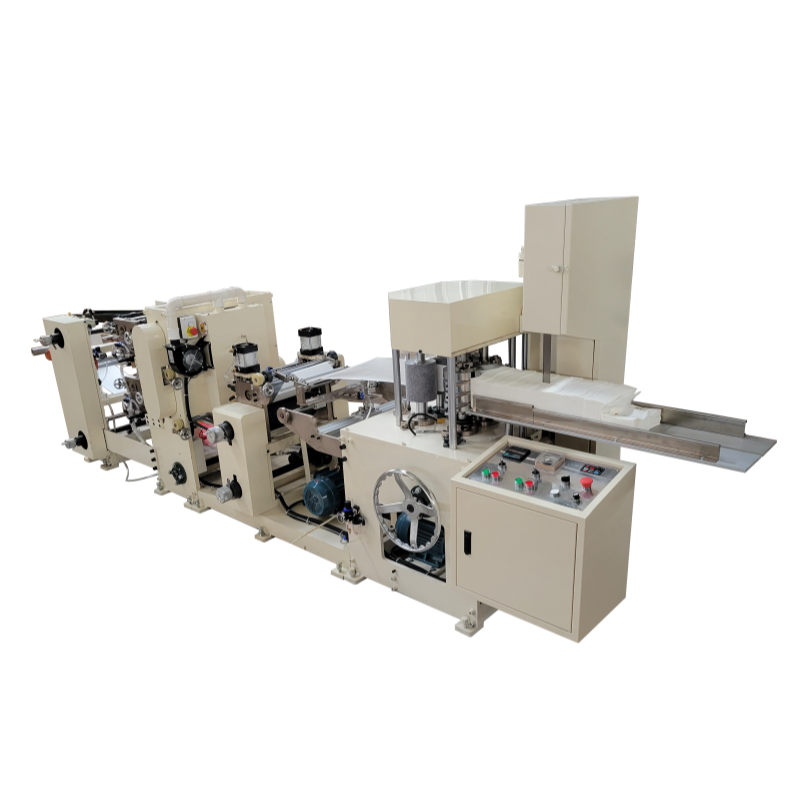
Why Cutting Unit Maintenance Is Critical for Napkin Machine Performance
Maintaining the cutting unit of a napkin machine directly impacts operational profitability—reducing unplanned downtime and preserving edge quality. Unmaintained components suffer accelerated wear, leading to micro-chipping on blades and thermal discoloration at critical interfaces—subtle failures that cumulatively erode output quality and yield losses exceeding 30% (Machinery Maintenance Institute 2024). Vibration from misaligned drive components and degraded lubrication efficiency often triggers cascading mechanical failures. In fact, 60% of unplanned stoppages stem from preventable cutting unit issues (DGM Global Industry Report 2023), costing manufacturers an average of $23,000 per incident. Consistent, proactive maintenance extends functional component lifespan by up to 52% versus reactive repair cycles—and ensures dimensional accuracy within ±0.25 mm, a non-negotiable benchmark for market-grade napkin compliance. When executed with discipline, maintenance shifts from cost center to strategic investment—protecting both equipment value and revenue integrity.
Core Components of the Napkin Machine Cutting System and Their Maintenance Roles
Blades: Material types, wear indicators, and lifespan by application
Napkin machine blades are typically forged from high-speed steel (e.g., M2) or tungsten carbide, often coated with TiN or TiAlN to reduce friction and delay wear. Critical wear indicators include edge radius >15 µm, surface roughness >Ra 0.4 µm, and micro-chipping visible under 10× magnification. For standard tissue napkins, blade life averages 1–2 million cuts; for heavier multi-ply or embossed papers, it drops to 500,000–1 million cuts. Daily verification of blade-to-anvil gap within ±0.02 mm—and carbon-paper contact pattern analysis—ensures consistent pressure distribution. Hardness must remain between 58–62 HRC; deviations signal heat-induced metallurgical degradation. Optical comparator measurements guide precision sharpening at 0.1 mm material-removal intervals. Slide surfaces should be lubricated with ISO VG 32 oil to minimize friction during each cut cycle.
Anvil rolls, drive gears, and alignment mechanisms: Function, failure modes, and inspection criteria
Anvil rolls provide rigid support during cutting; drive gears transmit torque; and alignment mechanisms—such as eccentric bushings or linear slides—maintain precise blade-to-anvil positioning. Common failure modes include anvil roll flattening or scoring, gear tooth pitting, backlash >0.1 mm, and misalignment due to bearing wear. Inspection must verify anvil runout <0.05 mm (dial indicator), gear mesh backlash within spec (typically 0.08–0.15 mm), and gap deviation ≤±0.02 mm. Marking compound tests reveal uneven gear tooth contact—a telltale sign of misalignment. Replace anvil rolls when surface roughness exceeds Ra 0.8 µm. Monthly validation of these parameters—paired with appropriate lubrication (ISO VG 320 gear oil and food-grade grease)—prevents progressive damage and sustains cut consistency.
Daily and Scheduled Maintenance Protocols for Napkin Machine Cutting Units
Pre-shift visual inspection checklist: Micro-chipping, thermal discoloration, and gap deviation
Begin every shift with a focused three-point visual assessment of the cutting assembly. First, inspect the blade edge under bright light for micro-chipping—fractures <0.1 mm that propagate rapidly under load. Second, check for thermal discoloration (bluing or burn marks) on both blade and anvil surfaces, signaling excessive friction or inadequate lubrication. Third, confirm blade-to-anvil gap using a calibrated feeler gauge—the acceptable tolerance is ±0.02 mm across most napkin machine models. Deviations beyond this range cause ragged edges and accelerate wear. Log all findings in a standardized daily checklist; even minor anomalies warrant immediate correction before production begins.
Lubrication standards: ISO VG 32 synthetic oils and food-grade greases for high-speed operation
Effective lubrication is foundational to cutting unit reliability. Use ISO VG 32 synthetic oil for closed gear systems and high-speed bearings—it maintains stable viscosity up to 80°C and resists thermal breakdown. For open gears and slide rails, apply USDA H1-certified food-grade NLGI 2 grease, formulated to resist washout and meet hygiene requirements for tissue-product manufacturing. Grease application should follow runtime intervals—not calendar time—typically every 8 hours of operation, avoiding over-application that attracts airborne contaminants. Oil levels in sight glasses require daily verification and topping off as needed. Adherence to these specifications prevents seizure, reduces heat buildup, and sustains long-term mechanical integrity.
When to Sharpen vs. Replace Blades in Napkin Machine Systems
Deciding whether to sharpen or replace blades should be guided by objective, measurable thresholds—not elapsed time or subjective judgment. Key metrics include edge radius >15 µm, surface roughness >Ra 0.4 µm, and gap deviation beyond ±0.02 mm. A well-maintained blade delivers ~18 minutes of high-speed cutting performance before requiring intervention; ignoring these metrics can shorten effective life to just 2 minutes. Sharpening restores geometry and sharpness economically—ideal for early-stage wear. Replacement becomes necessary only when repeated sharpening reduces blade thickness below the manufacturer’s structural safety limit, compromising gap control and mechanical stability. The table below summarizes evidence-based decision criteria:
| Wear Metric | Measurable Threshold | Recommended Action |
|---|---|---|
| Edge radius | > 15 µm | Sharpen |
| Surface roughness (Ra) | > 0.4 µm | Sharpen |
| Gap tolerance deviation | > ±0.02 mm | Realign or sharpen |
| Blade thickness below safe limit | Manufacturer-specific | Replace |
Applying this protocol ensures predictable cut quality, minimizes unnecessary downtime, and maximizes total blade lifecycle value.
FAQ
Why is cutting unit maintenance so important for napkin machines?
Caring for the cutting unit prevents unplanned downtime, maintains product quality, and reduces costs. It ensures precise cutting and extends the lifespan of machine components.
How often should blades be inspected or maintained?
Blade inspection should be a daily activity. Maintenance intervals depend on wear and usage but should follow a consistent schedule for optimal performance.
What are the key indicators for blade wear?
Key indicators include edge radius >15 µm, surface roughness >Ra 0.4 µm, micro-chipping, and bluing or heat damage on the blade or anvil.
When should blades be replaced versus sharpened?
Blades should be sharpened when their edge geometry can be restored. If sharpening reduces blade thickness beyond safe limits, replacement is required.
What type of lubrication works best for napkin machine cutting systems?
Use ISO VG 32 synthetic oil for high-speed bearings and USDA H1-certified NLGI 2 grease for open gears and rails to ensure performance and hygiene.
