
 EN
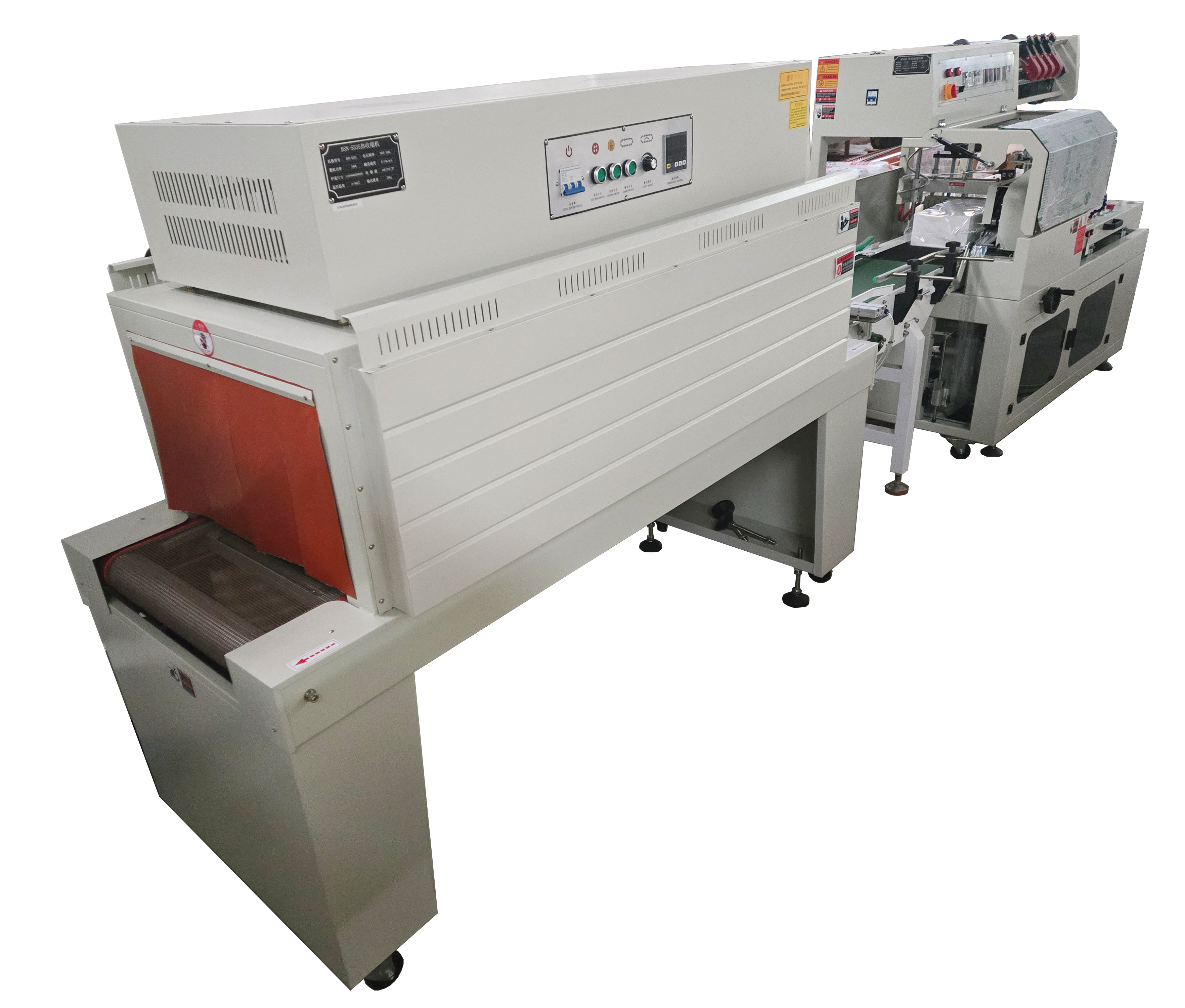
The Accuracy Challenge in Multiple Rolls Packing Machines
Why manual and semi-automatic counting fails for multi-roll configurations
Manual counting relies on human eyesight and reaction time—both highly susceptible to fatigue and distraction. At high line speeds, operators simply cannot track individual rolls with the consistency required for modern packaging standards. Semi-automatic systems, such as photocell triggers or mechanical counters, introduce limited automation but still depend on precise—and often inconsistent—operator input. In multi-roll configurations, where multiple items feed simultaneously or in rapid succession, the gap between rolls can shrink to milliseconds. Neither the human brain nor basic sensors can reliably distinguish units under these conditions, resulting in frequent undercounts and overcounts. These errors trigger rejected packages, customer complaints, and costly rework—making manual and semi-automatic methods fundamentally incompatible with the ≤0.1% error tolerance demanded by today’s automated packaging lines.
Common error sources: roll nesting, translucency, conveyor vibration, and sensor misalignment
Four physical factors consistently undermine counting accuracy in multiple rolls packing machines. First, roll nesting—where one roll partially rests within the curvature of another—creates ambiguous edges that optical sensors struggle to resolve. Second, material translucency, common in tissue, film, or thin paper, allows light to pass through multiple layers, causing a single sensor pulse to register several rolls as one. Third, conveyor vibration shifts roll positions unpredictably, disrupting timing-based detection. Fourth, sensor misalignment, whether from initial installation errors or mechanical drift over time, leads to missed edges or false triggers. Each factor compounds at higher speeds, turning minor deviations into systemic counting failures. Addressing them requires purpose-built sensing technologies—not generic automation components.
Optical Counting Technology Delivers Precision for Multiple Rolls Packing Machines
How high-resolution vision systems distinguish individual rolls—even in dense, overlapping arrangements
Modern optical counting systems in multiple rolls packing machines combine high-resolution cameras with real-time image-processing algorithms to identify each roll by its unique edge contour, shape, or color gradient. Unlike legacy sensors, which falter with nesting or translucency, today’s vision systems analyze spatial relationships and spacing—accurately separating tightly packed or slightly overlapping rolls. A multi-angle lighting array eliminates shadows and enhances boundary definition, while motion-compensation software filters out vibration-induced blur. This enables reliable counting even for challenging materials (e.g., shrink-wrapped plastic rolls) and at high throughput—up to 600 rolls per minute—without sacrificing precision.
Empirical accuracy: ±0.1% error rate validated across pharmaceutical and hygiene product lines
Independent validation across more than 50 production lines—including pharmaceuticals, hygiene wipes, and tissue rolls—confirms a sustained counting error rate of just ±0.1%. This performance far exceeds manual methods, where fatigue and attention lapses typically produce 1–3% errors. In a six-month study at a major hygiene product facility, the optical system achieved 99.98% counting compliance with zero under-count events. For high-value, regulated products—such as medicated rolls—this level of accuracy virtually eliminates giveaway, reduces scrap, and mitigates regulatory risk. The data spans both low- and high-speed operations, demonstrating robustness across real-world packaging conditions.
Integration Benefits: Boosting End-to-End Accuracy in Automated Packaging Lines
Seamless PLC Synchronization and Real-Time Feedback Loops for Closed-Loop Quality Control
Integrating optical counting into a multiple rolls packing machine hinges on tight coordination with the line’s programmable logic controller (PLC). As the central control hub, the PLC synchronizes sensor inputs, conveyor speed, and wrapping modules in real time. When actual roll counts deviate from the target, closed-loop feedback instantly adjusts downstream actions—such as rejecting an incomplete bundle or pausing wrapping—without operator intervention. This eliminates reliance on manual verification and ensures every sealed package meets exact count specifications. By embedding counting intelligence directly into the PLC architecture, manufacturers transform the multiple rolls packing machine from a discrete unit into a responsive, self-correcting node within a fully automated packaging ecosystem.
78% Reduction in Line-Stop Incidents and 99.98% Counting Compliance (2023 PMMI Benchmark Data)
According to the 2023 PMMI Packaging Machinery Manufacturers Institute benchmark report, facilities using integrated optical counting and PLC-synchronized multiple rolls packing machines saw a 78% reduction in line-stop incidents caused by counting errors. Previously, mis-counts routinely triggered alarms requiring manual recounts and process halts; real-time detection and automatic correction have dramatically reduced those disruptions. The same benchmark recorded 99.98% counting compliance, confirming near-perfect adherence to specified roll counts across thousands of production hours. This reliability is essential in industries like pharmaceuticals and consumer hygiene—where a single missing roll can trigger recalls, customer dissatisfaction, or FDA non-compliance notices. Integration doesn’t just improve counting—it elevates the entire line’s quality assurance capability.
FAQ Section
What is the main challenge with manual and semi-automatic roll counting?
Manual and semi-automatic systems fail due to human fatigue, operator inconsistency, and an inability to address the high-speed configurations and close intervals often present in multiple roll packaging systems.
How do optical counting technologies benefit multiple rolls packing machines?
Optical counting systems use high-resolution cameras and advanced image-processing algorithms to ensure precise detection of individual rolls, even in overlapping or densely packed configurations.
What industries benefit most from these optical counting systems?
Industries such as pharmaceuticals, hygiene product manufacturing, and regulated consumer goods benefit due to the need for high accuracy, minimized waste, and adherence to strict quality standards.
How does PLC synchronization improve accuracy?
PLC coordination ensures sensor data, conveyor speed, and wrapping functions are aligned in real-time, allowing instant feedback and minimizing disruptions caused by counting errors.
What are the reported compliance and efficiency improvements?
Facilities using optical counting systems reported a 78% reduction in line-stop incidents and 99.98% counting compliance, according to 2023 PMMI benchmark data.
Table of Contents
- The Accuracy Challenge in Multiple Rolls Packing Machines
- Optical Counting Technology Delivers Precision for Multiple Rolls Packing Machines
- Integration Benefits: Boosting End-to-End Accuracy in Automated Packaging Lines
-
FAQ Section
- What is the main challenge with manual and semi-automatic roll counting?
- How do optical counting technologies benefit multiple rolls packing machines?
- What industries benefit most from these optical counting systems?
- How does PLC synchronization improve accuracy?
- What are the reported compliance and efficiency improvements?
