
 EN
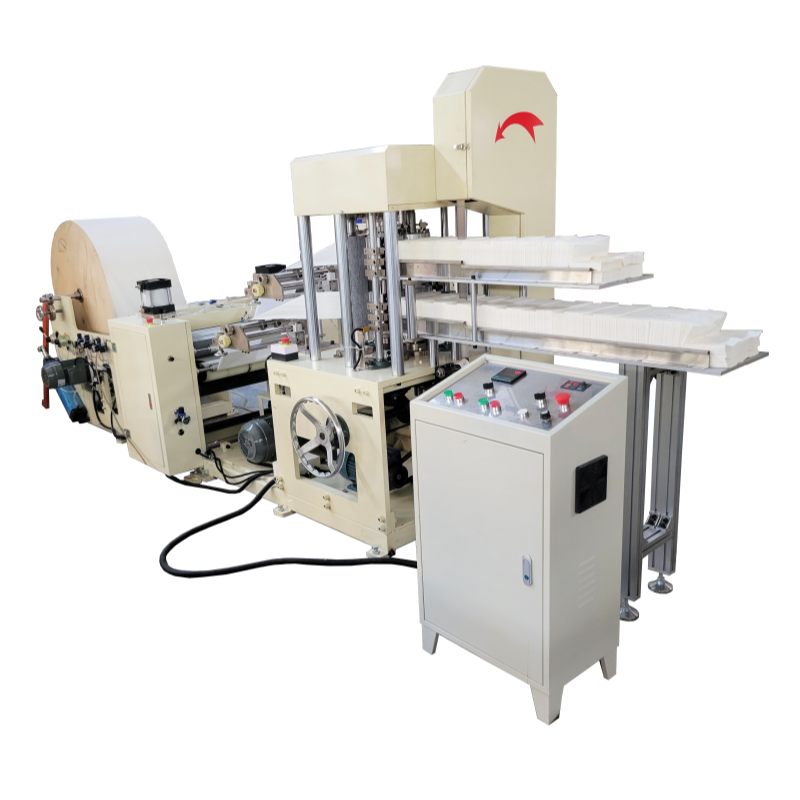
Real Factory Downtime Case Ignoring Standard Maintenance Cycles
Our global after-sales technical team has provided long-term follow-up service for tissue manufacturers across the Middle East, Africa, South America and CIS areas over the past decade, and we have witnessed many factories shorten the full service life of toilet paper machine severely by skipping regular maintenance workflows. A medium-sized toilet paper production plant in Eastern Africa purchased our fully automatic PLC frequency conversion toilet paper machine five years ago, which was designed to operate stably for more than 10 years under standardized daily, weekly and monthly maintenance rules. In the first two years after equipment arrival, the factory followed our official maintenance manual strictly, and the machine only needed minor worn part replacement once every 18 months with stable hourly output. Later, the factory’s management cut maintenance labor costs and canceled daily dust cleaning, weekly lubrication and monthly electrical cabinet inspection procedures for toilet paper machine. After eight months of irregular operation, a string of sudden failures broke out continuously during three-shift mass production: unwinding tension sensors failed frequently due to paper dust covering lens surfaces, transmission gear bearings generated sharp abnormal noise from insufficient lubrication, the PLC control cabinet overheated from blocked cooling fans, and finished toilet rolls appeared irregular outer diameter caused by servo parameter drift without monthly calibration. The factory was forced to suspend production for four consecutive working days for full machine overhaul, spending nearly 11,000 US dollars on bearing, sensor and cooling fan replacement, and losing bulk export order delivery deadlines. After our overseas engineers re-trained the factory’s maintenance staff and formulated fixed cyclic maintenance schedules matched with the toilet paper machine’s design standards, all hidden faults were eliminated, and the equipment recovered consistent high-speed operation status. This real service case fully proves that systematic regular maintenance is the most cost-effective way to maximize the service cycle of toilet paper machine. As a national high-tech enterprise with more than 40 years of machinery manufacturing experience and a 12,000 square meters production workshop, we attach complete multi-language maintenance operation manuals and remote one-on-one training for every set of toilet paper machine before delivery, helping customers avoid costly equipment aging losses caused by neglected maintenance.
Professional Analysis On How Cyclic Maintenance Reduces Machine Wear Mechanically
Most factory operators only realize maintenance can avoid sudden breakdowns, but they lack deep understanding of how tiered daily, weekly, monthly maintenance slows down natural aging of core mechanical components inside toilet paper machine. The whole structure of our toilet paper machine is divided into unwinding transmission unit, embossing rewinding unit, slitting cutting unit and automatic electrical control unit, each module has unique wear risks triggered by long-term production environment full of paper fiber dust. Daily maintenance mainly targets surface dust removal of rollers, sensors and conveyor belts of toilet paper machine; tiny paper scraps left on embossing rollers will form permanent scratch pits after thousands of hours of high-speed extrusion, while dust covering optical sensors leads to unstable length counting and paper breakage alarms. Weekly maintenance focuses on targeted lubrication of bearings, chains and gear sets inside the transmission system. Without regular filling of designated food-grade lubricant, metal components produce dry friction that expands bearing clearance rapidly, resulting in unsmooth rewinding and loud running noise of toilet paper machine. Monthly deep maintenance covers mechanical parallel calibration of embossing rollers and slitting knives; long-term vibration during production will cause tiny position deviation of precision components, and regular calibration can keep finished toilet roll thickness and emboss texture uniform for years. TAPPI tissue equipment laboratory published long-term wear comparison data in 2025: toilet paper machine under complete cyclic maintenance only suffers 17% mechanical component wear after five years of three-shift operation, while equipment without standardized maintenance reaches 62% wear rate within two years, greatly shortening the usable lifespan. All maintenance cycle standards marked in our toilet paper machine manual are summarized from thousands of unit test data accumulated by our 34-patent R&D team, which perfectly fit the mechanical load design of our independently developed rewinding and embossing structure.
Tiered Standard Maintenance Workflow Matched With Xinda Toilet Paper Machine
Combined with our decades of on-site after-sales service records, we sorted out three layers of fixed maintenance operation specifications exclusively adapted to all models of our toilet paper machine, covering daily pre-shift & post-shift care, weekly transmission system upkeep and quarterly full machine deep inspection, with clear operable steps without complex professional tools. The daily maintenance flow for toilet paper machine takes less than 20 minutes per shift: operators use low-pressure compressed air soft blow tools to clear paper dust on embossing rollers, tension sensors and slitting knife surfaces after shutdown, check whether all frame fixing screws and belt tightness are normal, and wipe the touch screen control panel to prevent dust from blocking touch sensing points. Weekly maintenance needs to be arranged after the last shift every week, including uniform supplementary lubricant for all rotating bearings, inspection of chain abrasion degree, cleaning of electrical cabinet outer cooling fan filter cotton, and recording stable operation parameters of toilet paper machine on maintenance log. Quarterly deep maintenance requires complete power cut and energy isolation following safety rules: maintenance personnel open the electrical cabinet to clean accumulated fiber dust inside PLC, frequency converter and relay components with anti-static brushes, re-calibrate the parallel clearance of upper and lower embossing rollers via precision feeler gauges, test the sensitivity of all safety stop sensors, and replace slightly worn small parts such as rubber press rollers in advance to prevent mid-shift sudden faults. For overseas customers operating in high-dust tropical workshops, our technical team can adjust maintenance frequency appropriately during pre-sale technical communication, shortening weekly lubrication to every five days and monthly cabinet cleaning to every three weeks, so the maintenance plan can adapt local production environment to protect toilet paper machine long-term stable operation.
Authoritative Expert Interpretation On Maintenance ROI Of Tissue Converting Equipment
Mr. Howard Pierce, senior tissue equipment life-cycle research expert of TAPPI International Tissue Association with more than 36 years of industrial research experience, released a cost benefit analysis report in 2026 focusing on the correlation between regular maintenance and toilet paper machine service life. Pierce conducted data tracking on more than 120 tissue factories across Africa and South America equipped with automatic rewinding toilet paper machine, and drew clear comparative conclusions. Factories that fully execute standardized cyclic maintenance can extend the effective production service life of toilet paper machine to 10–12 years, with annual spare parts replacement cost controlled below 1,300 US dollars; factories that only carry out emergency repair after equipment breakdown can only keep the machine running normally for 4–5 years, and annual component replacement and overhaul expenditure exceeds 4,800 US dollars, plus unpredictable production shutdown loss caused by sudden failures. He pointed out that many small tissue plant owners mistakenly regard regular maintenance as extra labor and material expenditure, but in fact standardized maintenance reduces the total comprehensive equipment cost by more than 60% throughout the whole life cycle of toilet paper machine. Pierce also mentioned that automated toilet paper machine equipped with PLC and servo control systems has more precise electronic sensing parts than old manual equipment, and dust, humidity and insufficient lubrication will cause irreversible damage to electrical modules faster, so regular maintenance becomes more critical for modern high-speed toilet paper machine. As a Grade A taxpayer and national high-tech enterprise, we integrate this authoritative life-cycle cost research conclusion into all pre-sale technical training for toilet paper machine buyers, helping overseas customers establish long-term equipment asset management awareness instead of passive emergency repair mode.
Full After-Sales Supporting System To Help Customers Complete Standardized Maintenance
Simply possessing maintenance operation standards cannot guarantee consistent implementation; our complete global after-sales supporting system provides full-process backing for customers to carry out regular maintenance of toilet paper machine and extend its service life stably. First, we deliver multi-language illustrated maintenance operation manuals and short operation video tutorials together with every toilet paper machine shipment, which explain each maintenance step intuitively for operators without rich mechanical experience. Second, we build a worldwide spare parts supply network covering the Middle East, Africa, South America and CIS regions, storing full sets of wearing parts for toilet paper machine such as bearings, sensors, embossing rollers and fan filters, realizing fast cross-border delivery when regular maintenance needs component replacement. Third, our multilingual remote technical support team provides permanent free video guidance; when maintenance staff encounter difficulties in roller calibration, electrical cabinet cleaning or lubricant model selection during cyclic maintenance of toilet paper machine, engineers can connect real-time video to guide standardized operation to avoid wrong maintenance steps causing secondary equipment damage. Fourth, our overseas on-site engineers will carry out one full machine deep maintenance training and operation audit during annual return visits to customer factories, correcting irregular maintenance habits in time and updating customized maintenance schedules according to the factory’s three-shift production load and raw material types. With standardized maintenance specifications plus all-round after-sales technical backing, customers can fully excavate the design service potential of our toilet paper machine, delay large-scale overhaul investment for many years, and maintain continuous high-yield production efficiency in long-term tissue manufacturing business.
Table of Contents
- Real Factory Downtime Case Ignoring Standard Maintenance Cycles
- Professional Analysis On How Cyclic Maintenance Reduces Machine Wear Mechanically
- Tiered Standard Maintenance Workflow Matched With Xinda Toilet Paper Machine
- Authoritative Expert Interpretation On Maintenance ROI Of Tissue Converting Equipment
- Full After-Sales Supporting System To Help Customers Complete Standardized Maintenance
