
 EN
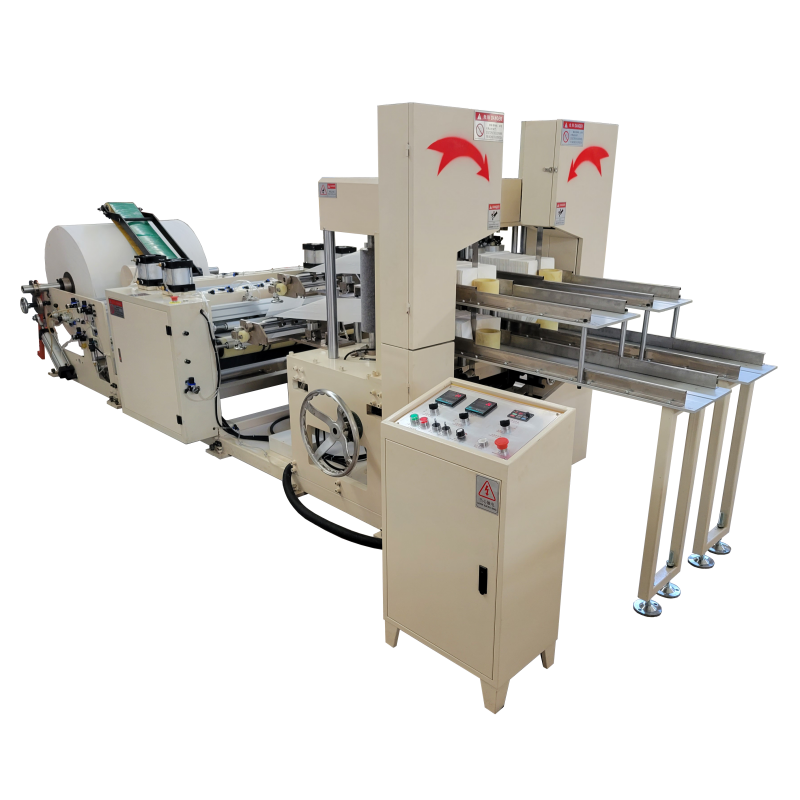
Performance of Recycled Fiber in Napkin Paper Machine Applications
Absorbency, Softness, and Tensile Strength Compared to Virgin Fiber
Recycled fiber alters the functional profile of napkins, creating a measurable trade-off between sustainability goals and core performance attributes. Absorbency—the most sensitive indicator—is typically 15–40% lower in 100% recycled napkins versus virgin-fiber equivalents. This stems from irreversible fiber wall collapse and hornification during prior drying cycles, which reduces lumen volume and swelling capacity. Softness, the primary tactile cue for consumers, is also significantly diminished: recycled fibers are stiffer and less conformable due to shortened length and surface damage. While chemical debonders and refined mechanical treatment help, achieving premium, cotton-like softness generally requires blending with long-fiber virgin pulp. Tensile strength—critical for integrity during use—can drop by 20–50% with post-consumer feedstock, demanding tighter control over forming and pressing to prevent breaks and avoid disintegration on contact.
| Property | Virgin Fiber Baseline | Recycled Fiber Impact | Key Operational Driver |
|---|---|---|---|
| Absorbency | High | 15–40% Lower | Reduced lumen volume for water uptake |
| Softness | High | Significantly Lower | Increased fiber stiffness requiring chemical mitigation |
| Tensile Strength | High | 20–50% Lower | Shorter, less-bondable fiber length |
Why Shorter Fiber Lengths Challenge Napkin Functionality in High-Contact Use
Recycled fibers undergo progressive shortening with each recycling cycle—mechanical shear and chemical degradation reduce average length from 3–5 mm in virgin softwood to 1–2 mm in post-consumer streams, accompanied by elevated fines content. In napkin paper machine operations, this morphology weakens the inter-fiber bonding network: shorter fibers provide less overlap and fewer hydrogen bond sites, resulting in a more brittle sheet structure. During high-contact use—such as wiping greasy hands or absorbing spills—the napkin must resist shear, tensile, and abrasion forces. A short-fiber matrix lacks the entanglement needed to absorb and distribute these loads, leading to premature failure, pilling, and linting. These defects compromise both consumer perception and functional reliability. Mitigation strategies—like targeted virgin fiber addition or strength-enhancing chemistry that bridges fiber ends—are essential to restore resilience without sacrificing recyclability.
Optimizing Napkin Paper Machine Operations for Recycled Fiber Feed
Critical Adjustments in Headbox Consistency, Press Nip Pressure, and Drying Profile
Recycled fiber’s shorter length and higher fines content require precise, coordinated tuning across the napkin paper machine. Headbox consistency is lowered to 0.2–0.4% to improve dispersion and preserve bulk—key for absorbency—while maintaining jet-to-wire alignment to prevent turbulence-induced formation defects. At the press section, nip pressure is increased by 5–10% (e.g., from 75 to 80–100 kN/m) to overcome recycled fibers’ tenacious moisture retention. To avoid crushing, a graduated two-nip configuration—first at 80 kN/m, second at 100 kN/m—is preferred, supported by higher felt vacuum for efficient dewatering without rewetting. In drying, early cylinder temperatures are reduced by 10–15°C to prevent surface hardening, while total drying time is extended by 10–15% to achieve target moisture content without embrittlement. Steam pressure is dynamically modulated using real-time moisture sensors to maintain optimal sheet properties. Together, these adjustments enable stable, high-quality production of recycled-content napkins without compromising absorbency or tactile performance.
Sustainability Trade-offs: Energy, Emissions, and Sourcing Realities
Shifting to recycled fiber offers clear environmental benefits—reduced deforestation pressure and landfill diversion—but introduces nuanced trade-offs in energy use, emissions, and supply chain complexity. Deinking and contaminant removal are energy-intensive processes; when powered by fossil-fuel electricity, they can erode upstream carbon savings. According to a 2018 life-cycle analysis by the Environmental Paper Network, recycled paper production consumes up to 40% less total energy than virgin pulp manufacturing, yet greenhouse gas reductions range widely—from 20% to 70%—depending on the mill’s energy mix and recycling infrastructure efficiency. Sourcing adds another layer: inconsistent recycled feedstock quality often forces higher refining energy and more frequent machine adjustments, potentially offsetting operational efficiencies. Long-distance transport further complicates the balance: the International Solid Waste Association’s 2022 study found transport emissions can account for 15–25% of total life-cycle emissions when collection radius exceeds 300 km. True sustainability, therefore, hinges not on recycled content alone, but on holistic evaluation of local sourcing, clean energy integration, and machine readiness to handle variable fiber inputs efficiently.
Proven Commercial Implementation: Case Studies in High-Recycled Napkin Production
European Producer’s ISO 14001-Certified Line: 85% Recycled Pulp at Scale
A leading European manufacturer successfully scaled production of premium napkins using 85% post-consumer recycled pulp on a standard tissue machine—without dedicated equipment upgrades. The initiative was anchored by ISO 14001-certified management of the entire fiber supply chain, ensuring traceability and consistent quality. To compensate for fiber shortening, the napkin paper machine was retrofitted with a triple-layer headbox that improved orientation and formation uniformity. Press nip pressure was optimized to 90 kN/m, and Yankee dryer hood temperature raised by 15°C to enhance bonding and tensile development. The result: tensile strength stabilized at 4.2 N/15 mm—on par with conventional virgin grades—and absorbency reached 6.5 g/g. Energy consumption fell 18% versus virgin pulp processing, primarily by eliminating chemical pulping stages. The line now produces over 12,000 metric tons annually of Ecolabel-compliant napkins for major food-service and hospitality clients. Independent audits verify a 32% reduction in CO₂ emissions per ton of product relative to the regional average—demonstrating that high-recycled napkin production is both technically robust and commercially scalable when aligned with purpose-built process controls.
FAQ
What are the main trade-offs between recycled and virgin fibers in napkin production?
Recycled fibers reduce sustainability-related impacts like deforestation but compromise absorbency, softness, and tensile strength when compared to virgin fibers.
How do shorter fiber lengths affect napkin usability?
Shorter fiber lengths weaken inter-fiber bonding, leading to reduced durability during high-contact use like wiping spills or hands.
What operational adjustments are necessary for recycled fiber scaling?
Critical changes include lowering headbox consistency, optimizing press nip pressure, and extending drying times with dynamic adjustments.
What sustainability considerations arise with recycled napkins?
Energy-intensive deinking, emissions from long transport distances, and supply inconsistencies are key concerns, requiring local sourcing and clean energy integration.
Is producing high-recycled napkins commercially viable?
Yes, targeted interventions such as improved headbox orientation and precise pressure adjustment enable stable production while reducing emissions and costs.
