
 EN
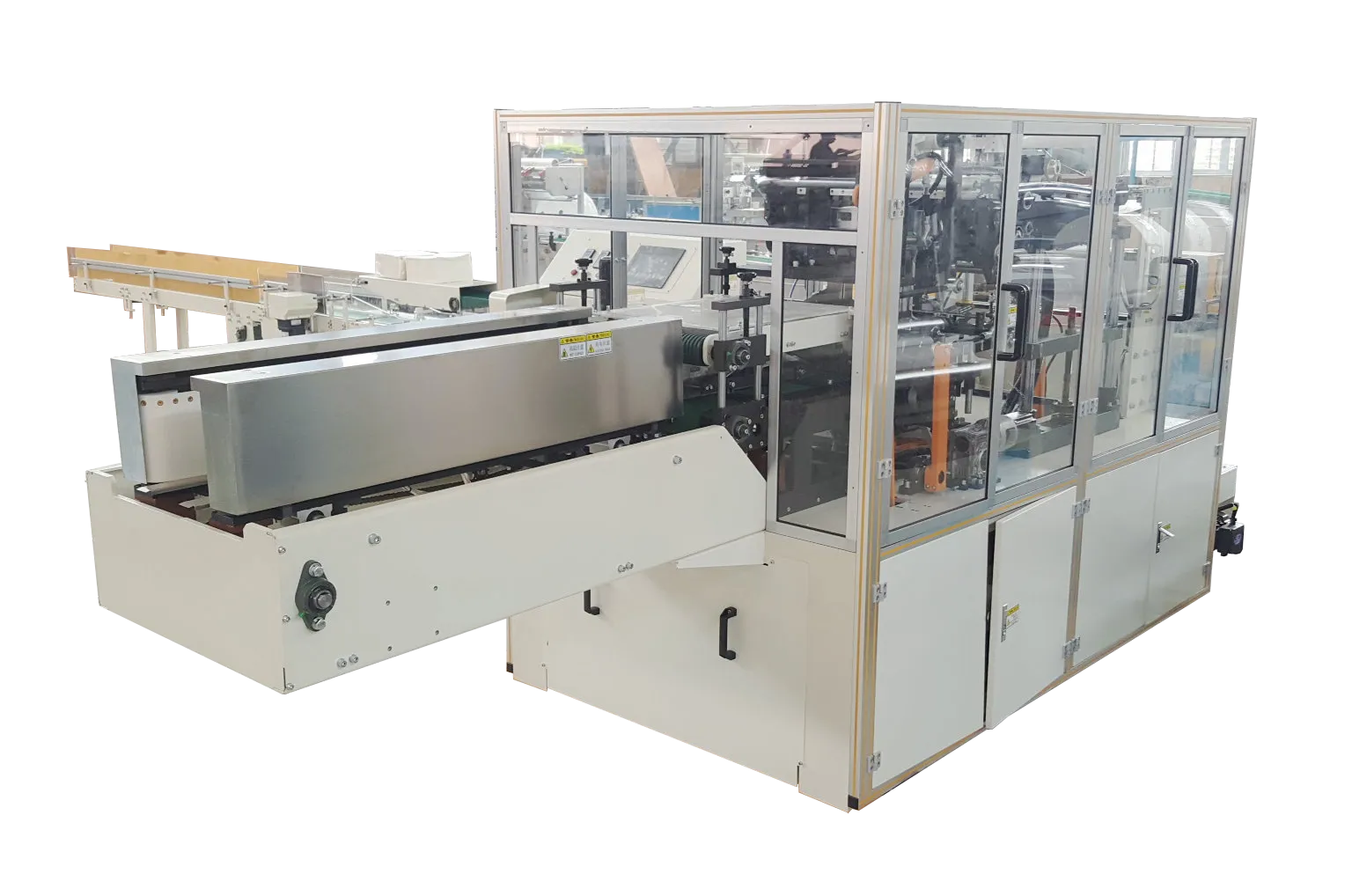
Core Automation Architecture of Automatic Tissue Paper Making Machines
PLC–HMI–IoT Integration for Seamless Process Continuity
The central nervous system of a modern automatic tissue paper making machine is its integrated control architecture—a self-regulating digital loop that replaces manual decision-making with real-time, adaptive orchestration. At its core lies the Programmable Logic Controller (PLC), which functions as the real-time brain, continuously processing signals from dozens of sensors monitoring critical variables like paper tension, moisture content, and caliper thickness. The Human-Machine Interface (HMI) translates this data into an intuitive touchscreen dashboard, enabling a single operator to oversee the entire production line—not just isolated stations. This shift transforms operations from reactive to predictive: using a unified communication protocol, the system synchronizes the rewinder speed with the embossing unit in milliseconds, preventing web breaks and misalignment that would otherwise cause costly downtime or quality deviations. IoT connectivity extends this intelligence beyond the factory floor, enabling remote monitoring, predictive maintenance alerts, and integration with enterprise systems—key enablers for improving Overall Equipment Effectiveness (OEE), as highlighted in a 2023 analysis of smart manufacturing systems.
Key Automated Modules: Creping, Embossing, Cutting, and Packaging
These synchronized modules execute the physical transformation of a parent roll into finished consumer products—fully automated and without manual handling. In the creping module, the PLC maintains precise, consistent doctor blade angle and pressure against the Yankee dryer—replacing subjective tactile judgment with repeatable control essential for achieving target softness and bulk. Next, the embossing module uses high-precision pattern rollers synchronized to the microsecond, ensuring flawless ply marriage without glue failure or misregistration. Modern systems support rapid embossing roll changes via HMI-based recipe selection—eliminating mechanical adjustments and reducing changeover time by up to 70%. The continuous sheet then enters the cutting module, where the PLC calculates exact sheet count and length in real time, directing high-speed rotary or log saw blades for micron-level accuracy. Finally, the packaging module automates conveyance, positioning, bag insertion, sealing, and coding—creating a hermetic, human-free environment that eliminates the primary sources of product contamination and operator physical strain.
Quantifiable Gains in Operational Efficiency and Quality Control
Real-Time Defect Detection and Closed-Loop Correction
Quality assurance shifts from a final-stage checkpoint to a continuous, proactive process. High-resolution vision systems and laser sensors scan the entire web at full production speed, detecting microscopic tears, basis weight inconsistencies, and embossing misalignments instantly. These anomalies trigger a closed-loop response: the PLC automatically adjusts upstream parameters—such as Yankee dryer steam pressure, creping blade geometry, or unwind tension—without stopping the line. This eliminates the latency of manual inspection, where defects can propagate across dozens of meters before detection. The result is uniform product quality and significantly reduced waste. Unlike semi-automated lines reliant on periodic sampling, fully automatic systems verify every meter of the web—ensuring 100% compliance with specifications and delivering measurable gains in both yield and consistency.
4.3× Fewer Batch Rejections vs. Semi-Automated Lines (2023 TAPPI Benchmark)
According to the 2023 TAPPI industry benchmark, facilities using fully automatic tissue paper making machines experienced 4.3 times fewer batch rejections than those operating semi-automated lines. This dramatic improvement stems directly from early, automated correction of incipient deviations—preventing minor process drifts from escalating into rejectable rolls or master jumbo reels. Economically, this translates into lower raw material waste and reduced rework labor, collectively lowering manufacturing cost per ton while strengthening brand trust through consistently high-quality output.
Labor Optimization: Cost Reduction and Workforce Transformation
92% Reduction in Manual Intervention Points — Case Evidence from India
A 2023 case study conducted at a leading Indian tissue manufacturer documented a 92% reduction in manual intervention points—from 50 discrete touchpoints to just 4—after deploying a fully automatic tissue paper making machine. Integrated PLC–HMI–IoT controls autonomously managed roll loading, web tension regulation, and auto-splicing, removing the need for constant operator oversight during extended runs. Direct labor costs fell by approximately 60%, as the workforce transitioned from repetitive manual tasks to higher-value roles in quality assurance, data analysis, and predictive maintenance. By reallocating three operators per shift into supervisory positions, the plant achieved a 35% increase in OEE within six months. The automation also mitigated chronic labor shortages and turnover—supported by structured upskilling programs—and enabled lights-out operation for up to 18 hours daily. Crucially, labor optimization here reflects strategic workforce transformation—not just headcount reduction—but building resilience, agility, and long-term operational maturity.
Scalability and Future-Proofing with Fully Automated Tissue Production
Fully automatic tissue paper making machines are built on a modular, digital-first architecture designed for growth and adaptability. Additional converting modules or packaging lanes can be integrated seamlessly without disrupting core line operations. The same PLC-based control backbone that coordinates creping, embossing, and cutting today supports remote diagnostics, over-the-air recipe updates, and native Industry 4.0 interoperability—including OPC UA and MQTT protocols. When raw material grades or product specifications change, a centralized recipe manager reconfigures all relevant process parameters in seconds—turning what was once a multi-hour changeover into a near-instantaneous adjustment. Real-time OEE, energy consumption, and defect metrics feed directly into ERP and MES platforms, empowering managers to anticipate capacity constraints, optimize scheduling, and align production with sustainability KPIs. Critically, throughput becomes decoupled from headcount: a single supervisor can oversee multiple lines, allowing mid-sized mills to scale second shifts or new SKUs with minimal incremental hiring. This makes the line not just a production asset—but a future-ready platform capable of evolving alongside market demand, regulatory expectations, and technological advancement.
FAQ Section
What is the role of PLC in automatic tissue paper making machines?
The PLC acts as the real-time brain of the machine, processing data from sensors, optimizing operational parameters, and ensuring consistent production without manual intervention.
How does IoT enhance tissue paper production?
IoT enables remote monitoring, predictive maintenance alerts, and system integration with enterprise platforms, improving operations and equipment effectiveness.
What are the main automated modules in these machines?
The key modules include creping, embossing, cutting, and packaging, all synchronized for efficient and high-quality tissue production.
How do such machines ensure high product quality?
Advanced vision systems and sensors detect defects in real-time, allowing the PLC to make instant corrections, ensuring uniform quality and reduced waste.
What are the cost and labor benefits of full automation?
Automation significantly reduces manual touchpoints, lowers labor costs, enhances efficiency, and transitions workers to higher-value roles, ultimately increasing overall equipment effectiveness (OEE).
Can these machines adapt to changes in production requirements?
Yes, they are designed with modular, digital-first architectures and can seamlessly integrate new modules or adapt to production changes through centralized recipe management.
Table of Contents
- Core Automation Architecture of Automatic Tissue Paper Making Machines
- Quantifiable Gains in Operational Efficiency and Quality Control
- Labor Optimization: Cost Reduction and Workforce Transformation
- Scalability and Future-Proofing with Fully Automated Tissue Production
-
FAQ Section
- What is the role of PLC in automatic tissue paper making machines?
- How does IoT enhance tissue paper production?
- What are the main automated modules in these machines?
- How do such machines ensure high product quality?
- What are the cost and labor benefits of full automation?
- Can these machines adapt to changes in production requirements?
