
 EN
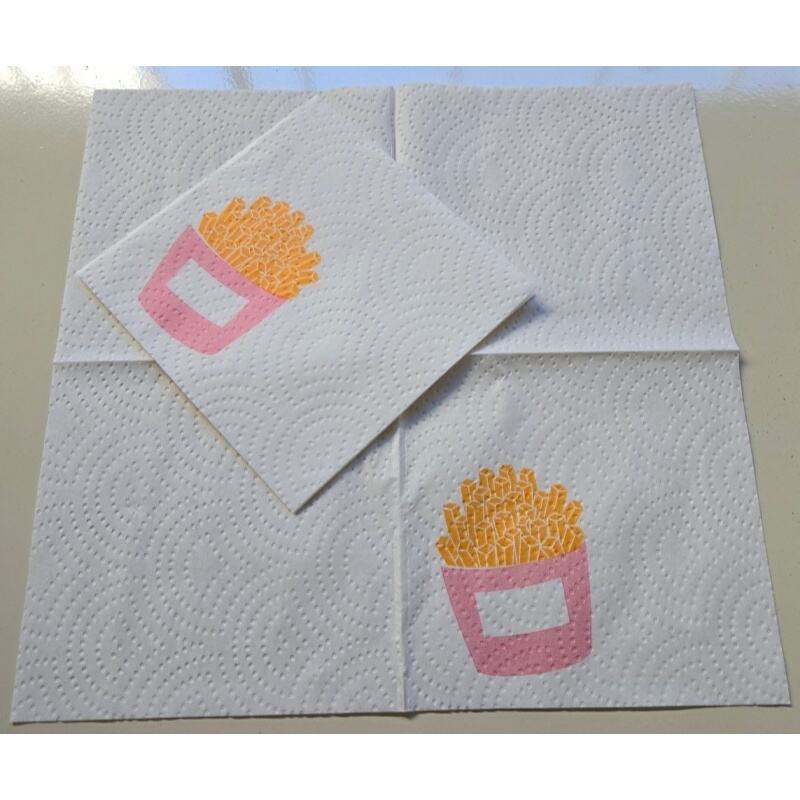
Core Tissue Paper Specifications for Paper Serviette Making Machine Compatibility
Optimal Grammage (GSM) Ranges: 14–40 gsm for Single-Ply and 28–60 gsm for Two-Ply Napkins
Single-ply napkins perform best with tissue paper in the 14–40 gsm range. This grammage delivers the ideal balance of softness, absorbency, and web strength—critical for high-speed converting on a paper serviette making machine. Below 14 gsm, sheets risk tearing during embossing or folding; above 40 gsm, they may jam, cause uneven cuts, or overload folding mechanisms. For two-ply napkins, the combined grammage typically falls between 28 and 60 gsm, with each ply commonly ranging from 14 to 30 gsm. Layering enhances bulk and wet strength while preserving compatibility with delicate folding units. The crepe structure introduced during tissue manufacturing further supports flexibility and stretch—key for precise, repeatable folding—and contributes to uniform absorbency across the sheet. Consistent crepe ratio and grammage are essential for stable web tension and reliable feed through unwinding, printing, and packaging stations.
Key Structural Requirements: Basis Weight Uniformity, Moisture Content, and Caliper Consistency
Three structural properties—basis weight uniformity, moisture content, and caliper consistency—are foundational to uninterrupted machine operation. Basis weight variation exceeding ±2% disrupts tension control, increasing the risk of web breaks and misalignment in cutting and folding units. Moisture content must be tightly held between 4–6%: too low causes brittleness, static buildup, and tearing; too high leads to wrinkling and poor fold definition. Caliper (thickness) variation should remain under 5% across the web to ensure consistent embossing depth, accurate fold registration, and reliable feeding. Modern paper serviette making machines integrate online sensors to monitor these parameters in real time, enabling immediate adjustments that safeguard line efficiency and product quality.
Fiber Raw Materials and Blends Compatible with Paper Serviette Making Machine Operation
Bleached Hardwood Kraft Pulp (BHKP), Recycled Fiber, and Sustainable Alternatives (Bamboo, Bagasse)
Bleached Hardwood Kraft Pulp (BHKP) remains the industry benchmark for premium napkin production. Its long, flexible fibers deliver exceptional softness, brightness, and formation uniformity—qualities directly aligned with consumer expectations and machine runnability at low grammages. Recycled fiber offers cost and sustainability advantages but introduces challenges: higher levels of fines, ink residues, and stickies can clog screens and impair web stability. Effective pulper screening and an additional cleaning stage are often required to maintain consistent performance. Sustainable alternatives like bamboo and bagasse are increasingly viable. Bamboo fibers are long and pliable, delivering hand feel and runnability close to BHKP—but require gentle handling to preserve fiber length. Bagasse, derived from sugarcane residue, has shorter fibers with strong absorbency but needs more intensive refining to develop adequate bonding strength. Both can be processed on standard paper serviette making machines when blended with BHKP or recycled pulp and supported by appropriate pulp preparation adjustments.
Impact of Fiber Blend Ratios on Softness, Wet Strength, and Machine Runnability
Fiber blend ratios are a primary lever for tuning napkin performance. Higher BHKP content improves softness and bulk but may reduce tensile strength; adding 20–30% softwood kraft pulp enhances wet and dry strength at the expense of some softness. Recycled blends above 50% often compromise wet strength, necessitating wet-strength agents to survive embossing and folding without disintegration. Runnability is equally sensitive: excessive fines or overly short fibers slow drainage, limiting speed and increasing break frequency. Conversely, longer bamboo fibers improve drainage and cross-directional strength—but if not properly controlled, they can wrap around rollers. Operators adjust refining energy and retention aid dosage to match each blend’s behavior, ensuring stable web formation, crisp folds, and sustained high-speed output without sacrificing softness or integrity.
Specialty Nonwoven Materials: Airlaid vs. Conventional Tissue in Paper Serviette Making Machine Applications
Airlaid Napkins: Absorbency Benefits, Structural Limitations, and Retrofit Requirements for Standard Machines
Airlaid napkins—formed by air-laying and bonding fibers without water—offer significantly higher absorbency and a cloth-like hand compared to conventional creped tissue. Industry data from 2023 indicates airlaid materials can absorb up to 2–3 times their weight in liquid, making them especially suited for premium food-service applications. However, their lack of hydrogen-bonded fiber networks results in lower tensile strength and reduced wet integrity. When run on a standard paper serviette making machine, airlaid webs demand targeted retrofits: embossing rollers require reduced pressure to avoid perforation, folding units need modified settings to accommodate higher bulk and lower elasticity, and tension control systems must be recalibrated to prevent breakage. Without these adaptations, frequent stops and inconsistent output undermine line efficiency. While airlaid delivers clear functional benefits, successful integration hinges on deliberate machine optimization—not just material substitution.
Material-Driven Performance Outcomes on the Paper Serviette Making Machine
Balancing Softness, Tensile Strength, and Fold Integrity Across Embossing, Cutting, and Packaging Stages
Napkin material directly determines how well a paper serviette making machine performs across all stages. Excessive softness increases tear risk during high-speed embossing; insufficient tensile strength invites stretching or breaks during cutting; and overly rigid sheets may crack along fold lines during final packaging. Fold integrity—the ability to hold sharp, durable creases without deformation—requires a minimum cross-directional tensile strength of 1.5 N/15 mm. While operators fine-tune embossing pressure and blade sharpness to compensate for minor variations in basis weight or moisture, the material itself remains the most decisive factor in runnability. Selecting the right grammage, fiber blend, and structural consistency ensures napkins meet both consumer expectations for plushness and the machine’s demands for reliability, speed, and precision.
FAQ Section
What is the optimal GSM range for single-ply and two-ply napkins?
Single-ply napkins work best within the 14–40 gsm range, and two-ply napkins typically fall between 28–60 gsm.
Why is moisture content critical for tissue paper used in serviette machines?
Moisture levels between 4–6% ensure brittleness or wrinkling is avoided, enabling seamless embossing and folding processes.
Which fiber types are compatible with paper serviette making machines?
Bleached Hardwood Kraft Pulp (BHKP), recycled fiber, bamboo, and bagasse are suitable, with adjustments made for optimal performance.
Can airlaid napkins be processed on standard paper serviette machines?
Yes, but targeted retrofits for embossing, folding, and tension control systems are essential for efficient production without frequent interruptions.
How do fiber blend ratios affect napkin softness and strength?
Higher BHKP ratios improve softness, while adding softwood kraft pulp enhances tensile strength. Recycled blends above 50% may require wet-strength agents to optimize runnability.
Table of Contents
- Core Tissue Paper Specifications for Paper Serviette Making Machine Compatibility
- Fiber Raw Materials and Blends Compatible with Paper Serviette Making Machine Operation
- Specialty Nonwoven Materials: Airlaid vs. Conventional Tissue in Paper Serviette Making Machine Applications
- Material-Driven Performance Outcomes on the Paper Serviette Making Machine
-
FAQ Section
- What is the optimal GSM range for single-ply and two-ply napkins?
- Why is moisture content critical for tissue paper used in serviette machines?
- Which fiber types are compatible with paper serviette making machines?
- Can airlaid napkins be processed on standard paper serviette machines?
- How do fiber blend ratios affect napkin softness and strength?
