
 EN
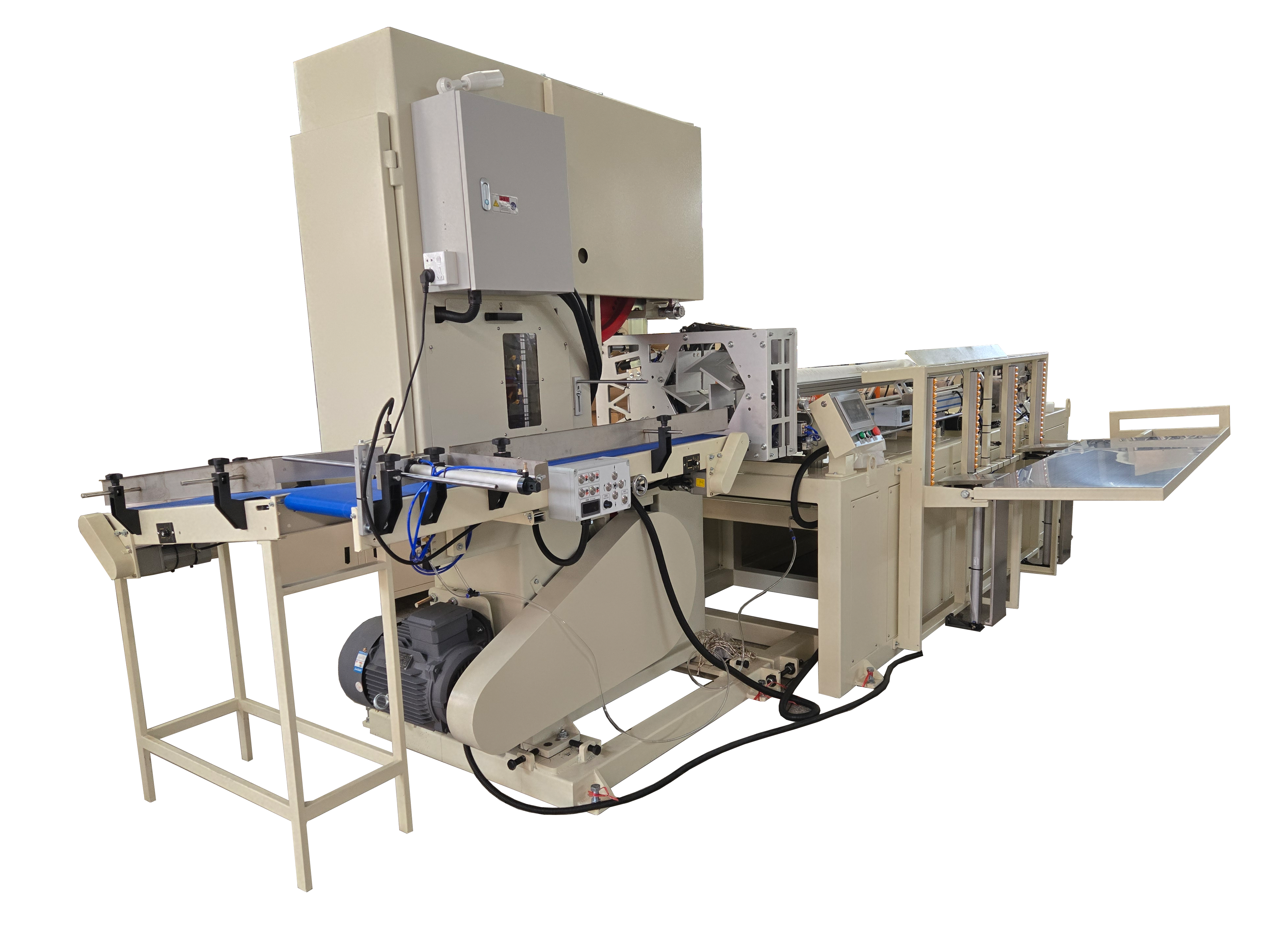
Core Perforation Parameters: Pitch, Blade Count, and Sheet Length
How pitch, blade count, and sheet length jointly determine tear quality and roll yield
Perforation pitch—the distance between successive perforation lines along the web—blade count—the number of cuts per revolution of the perforation roll—and sheet length—the final cut length of each sheet—are interdependent variables that collectively govern tear performance and production yield. These parameters must be tuned in concert to ensure clean, predictable tearing without compromising web integrity or generating waste.
A short pitch combined with high blade count increases perforation density, enhancing tear ease but potentially reducing tensile strength and increasing risk of premature sheet separation during rewinding or handling. A longer pitch reduces tear points, which may lead to difficult or jagged tearing. Crucially, sheet length must be an exact integer multiple of the pitch; mismatched values cause incomplete perforations at sheet ends or material waste due to misaligned cuts. Yield optimization hinges on minimizing breakage, off-spec rolls, and rewind-related defects—achievable only when all three parameters align precisely with paper properties and machine dynamics.
Interdependence with web speed and paper basis weight on toilet roll machine performance
Web speed and paper basis weight significantly influence how perforation settings translate into real-world performance. At higher line speeds, blade dwell time decreases, demanding precise timing, robust blade materials, and stable engagement to avoid smearing or skipped cuts. Thicker or heavier paper (e.g., 20–25 g/m²) resists tearing and accelerates blade wear; operators typically compensate by increasing pitch or reducing blade count. In contrast, lightweight tissue (14–17 g/m²) tears readily and is prone to over-perforation—leading to web breaks if pitch is too short or blade count too high.
The PLC synchronizes blade activation with speed sensors and tension feedback, while real-time load cell monitoring of tear force enables dynamic compensation for paper variability. A practical calibration guideline: reduce blade count by one for every 20 g/m² increase in basis weight, then validate tear consistency across multiple production runs. This integrated approach prevents unplanned downtime and ensures every roll meets ISO 12625-5 tear strength requirements.
Optimizing Perforation Pitch for Consistent Tearing and User Experience
Balancing tear ease, strength retention, and waste minimization on the toilet roll machine
Perforation pitch is the primary lever for balancing user experience and manufacturing reliability. Too short a pitch weakens the web, increasing the likelihood of edge tears, dust generation, and sheet count errors during high-speed converting—raising scrap rates and maintenance frequency. Too long a pitch compromises usability, resulting in uneven or resistant tearing that undermines brand trust.
Optimal pitch depends first on paper basis weight and tensile strength. For light-weight tissue (14–17 g/m²), 60–80 mm typically delivers consistent, clean separation without sacrificing roll integrity. Heavier grades (20–25 g/m²) generally require 90–110 mm to maintain tear ease while preserving strength. Additional factors—including web tension, moisture content (higher humidity lowers tear resistance), and rewind pressure—must also inform final tuning. Because paper behavior varies batch-to-batch, empirical validation using the actual production stock remains essential. This disciplined, data-informed approach minimizes waste and ensures repeatable performance across shifts and SKUs.
Perforation Roll Configuration and Blade Count Alignment
Matching blade count and roll geometry to web elongation and machine line speed
Blade count and perforation roll geometry must be selected not in isolation, but as part of a system calibrated to web elongation and line speed. Blade count defines perforation frequency per revolution; roll diameter affects wrap angle, contact time, and tension distribution across the web. Both directly impact cut consistency, especially under dynamic conditions.
| Parameter | Impact on Perforation |
|---|---|
| Blade count | Higher count increases perforation density but risks web flutter and blade skipping at elevated speeds. |
| Roll diameter | Larger diameters reduce angular variation in tension, improving tear accuracy and reducing edge deformation. |
| Web elongation | Papers with >3% stretch under tension require wider blade spacing to prevent micro-tears between perforations. |
| Line speed | Above 1,200 m/min, blade alignment tolerance tightens to ±0.05 mm; even minor misalignment causes inconsistent depth or missed cuts. |
Mismatched configurations—such as excessive blade count on a small-diameter roll—reduce dwell time below the threshold needed for full penetration, causing shallow or intermittent perforations. Too few blades, meanwhile, extend the distance between tear points beyond ergonomic limits. Proper alignment ensures reliable sheet separation, maximizes roll yield, and sustains OEE above 85%.
Setting and Adjusting Parameters via HMI/PLC on Toilet Roll Machine
Real-time parameter tuning, fault logging, and recipe management in production
Modern toilet roll machines integrate perforation control into a unified HMI/PLC platform, enabling operators to adjust pitch, blade count, and sheet length on-the-fly without stopping production. The PLC dynamically recalibrates blade timing, dwell duration, and engagement force based on live inputs from speed encoders, tension load cells, and basis weight sensors—ensuring tear quality remains stable despite upstream variability.
Fault logging captures anomalies like skipped perforations, blade chatter signatures, or tension excursions, linking them to timestamped process data for root-cause analysis. Recipe management stores validated parameter sets for common configurations—e.g., “2-ply, 18 g/m², 100 mm pitch”—allowing changeovers in under 90 seconds. This level of integration reduces setup waste by up to 40%, improves first-pass yield, and strengthens traceability—all critical components of ISO 9001-compliant converting operations.
FAQ
How do pitch, blade count, and sheet length affect perforation quality?
These factors jointly determine tear performance and production efficiency. A short pitch and high blade count improve tear ease but may reduce tensile strength. Incorrect alignment of the sheet length with the pitch can lead to waste or misaligned cuts.
Why is perforation pitch critical for user experience?
Pitch affects the balance between usability and manufacturing reliability. A pitch that’s too short can weaken the web, whereas a pitch that’s too long may result in uneven tearing.
What role does blade count play in perforation?
Blade count determines perforation density per revolution. Misaligned configurations, such as too high of a blade count, can lead to skipped cuts or shallow perforations.
How can PLC systems improve toilet roll manufacturing?
PLC systems allow real-time adjustments to parameters like pitch and blade count during production. They also enable fault logging and recipe management for efficient operations and improved yield.
What is the recommended pitch for lightweight tissue vs. heavier grades?
For lightweight tissue (14–17 g/m²), 60–80 mm is typically optimal, while 90–110 mm works better for heavier grades (20–25 g/m²) to maintain tear quality without losing tensile strength.
Table of Contents
- Core Perforation Parameters: Pitch, Blade Count, and Sheet Length
- Optimizing Perforation Pitch for Consistent Tearing and User Experience
- Perforation Roll Configuration and Blade Count Alignment
- Setting and Adjusting Parameters via HMI/PLC on Toilet Roll Machine
-
FAQ
- How do pitch, blade count, and sheet length affect perforation quality?
- Why is perforation pitch critical for user experience?
- What role does blade count play in perforation?
- How can PLC systems improve toilet roll manufacturing?
- What is the recommended pitch for lightweight tissue vs. heavier grades?
