
 EN
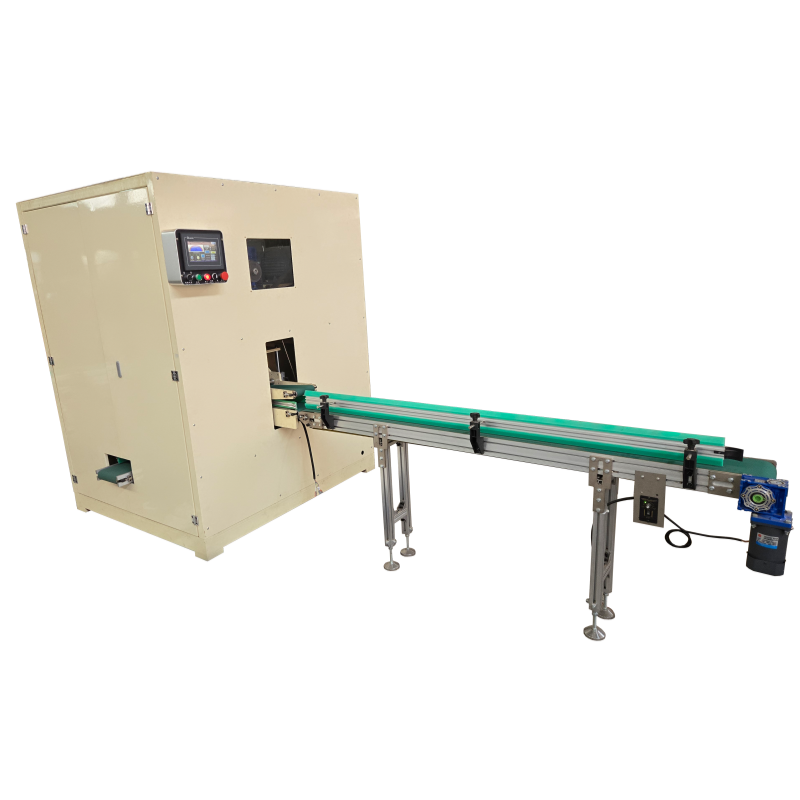
Real Factory Maintenance Case About Improper Embossing Roller Replacement Loss
Our technical service team from Quanzhou Xinda Machinery has delivered on-site installation and maintenance guidance to more than 400 tissue processing factories across the Middle East, Africa and Southeast Europe in the past decade, and we have accumulated a large number of real failure cases caused by non-standard replacement of embossing rollers on embossing facial tissue machine. One tissue manufacturer in East Africa purchased our fully automatic PLC-controlled embossing facial tissue machine two years ago to produce multi-layer facial tissue with delicate flower emboss patterns. The factory’s maintenance workers lacked standardized operation training and replaced a set of worn embossing rollers by themselves without contacting our after-sales engineers. They used brute force to pry the roller shaft with steel crowbars during disassembly, failed to clean bearing seats and add designated lubricants before installing new rollers, and skipped the parallel calibration step after assembly. Within three working days after replacement, the machine generated a series of severe problems: uneven embossing depth on finished facial tissue, frequent paper deviation and jamming during high-speed operation, abnormal metal friction noise from the embossing unit, and obvious scratches on the surface of the brand-new embossing roller. The factory was forced to stop production for two full shifts to wait for our overseas technical staff to rush over for overhaul, resulting in nearly 1,200 kilograms of raw jumbo tissue waste and direct economic losses of more than 8,000 US dollars. After re-operating the full standardized replacement process guided by our engineers, all embossing defects disappeared completely, the machine resumed stable continuous production, and the service life of the new embossing roller was predicted to reach 18 months as designed. This practical maintenance case fully illustrates that irregular disassembly and installation of core components like embossing rollers will bring huge downtime and material loss to tissue factories, and it also reflects the value of the complete operation training and remote technical support matching our embossing facial tissue machine.
Professional Pre-Disassembly Inspection Standard for Embossing Facial Tissue Machine
Before starting any disassembly action of embossing rollers on embossing facial tissue machine, a complete pre-check process must be carried out strictly following the operation manual formulated by Xinda’s 40-year R&D team, which can avoid secondary damage to the machine frame, transmission gear and chrome-plated embossing roller surface. The first key inspection item is full power cut-off and energy isolation; operators need to turn off the main power cabinet switch of the whole tissue production line, lock the power supply switch with a safety buckle, and discharge residual voltage of the frequency conversion motor and PLC control cabinet to prevent accidental startup triggered by misoperation during disassembly. Next, technicians need to empty all residual tissue base paper between the upper and lower embossing rollers, clean accumulated paper dust and pulp debris in the embossing cavity with compressed air soft blowing tools, because hard paper scraps will scratch the precision chrome pattern layer of new rollers during reinstallation. The third step is to record all original running parameters stored in the touch screen of embossing facial tissue machine, including embossing pressure value, production line running speed, roller clearance distance and hydraulic cylinder opening range; all data should be backed up in the machine’s PLC memory and paper maintenance log, which provides accurate reference for parameter recovery after roller replacement. Professional mechanical research data issued by TAPPI Tissue Converting Department shows that more than 60% of post-replacement embossing quality instability originates from failure to record original pressure and clearance parameters before disassembly, and our embossing facial tissue machine reserves a parameter snapshot function on the HMI screen specially for this hidden trouble, greatly reducing the debugging difficulty after component replacement. In addition, inspectors need to check the wear degree of bearing sleeves, transmission chains and synchronous gears connected with embossing rollers; if excessive clearance or tooth surface corrosion is found, these matching parts should be replaced together with embossing rollers instead of repeated assembly of worn accessories, so as to guarantee long-term parallel running of the embossing unit.
Step-by-Step Standard Disassembly Operation to Protect Embossing Roller Precision Structure
The disassembly link of embossing rollers determines whether the chrome embossing pattern surface and roller central shaft can maintain complete precision, and all operation specifications are summarized from thousands of after-sales maintenance practices of Xinda’s national high-tech enterprise R&D department. When loosening the fixing bolts at both ends of the embossing roller, operators must use a torque wrench with adjustable force value instead of ordinary spanners, and unscrew the bolts alternately from left and right ends with equal torque to avoid unilateral stress bending the solid steel roller shaft of embossing facial tissue machine. After removing the locking end caps, soft rubber cushion blocks need to be padded under both ends of the roller shaft before slowly sliding the old embossing roller out horizontally along the bearing slide rail; metal hammers or sharp metal tools are forbidden to knock the roller body, as tiny pits on the embossing pattern will cause permanent uneven indentation on facial tissue products. After taking out the waste roller, professional maintenance staff should conduct deep cleaning and overhaul on the bearing base, slide rail and hydraulic pressure contact surface of embossing facial tissue machine. All aging grease, paper dust and rust spots inside the bearing chamber need to be wiped clean with lint-free industrial cloth, then inject food-grade anti-wear lubricant designated by Xinda machinery evenly into each bearing gap, insufficient lubrication will lead to dry friction and abnormal vibration of the embossing unit within one week of resuming production. For factories equipped with multiple sets of embossing rollers for pattern switching, we suggest placing disassembled rollers on special horizontal storage racks instead of vertical stacking or direct ground placement, which can effectively prevent the embossing pattern surface from being squeezed and deformed during storage. Our after-sales technical manual specially marks the forbidden operation items in bold text for global customers from different cultural backgrounds, and we also distribute multi-language video operation tutorials along with every embossing facial tissue machine shipment to lower the error rate of on-site disassembly work for overseas operators without rich mechanical experience.
Authoritative Calibration & Installation Rules Verified by Tissue Processing Industry Experts
Many tissue plant operators only pay attention to whether embossing rollers can be installed in place, but ignore the parallelism and pressure balance calibration after assembly, which is the core link to ensure stable embossing effect of embossing facial tissue machine. Mr. Harold Gates, senior tissue converting equipment expert with more than 30 years of research experience in TAPPI International Tissue Technology Association, published a technical paper in 2025 pointing out that the parallel error between upper and lower embossing rollers must be controlled within 0.03mm to produce uniform soft emboss patterns on two-ply or three-ply facial tissue; once the parallel deviation exceeds the standard range, partial over-pressing will tear tissue fibers while other areas present shallow unclear patterns, raising raw material waste rate obviously. All embossing facial tissue machine produced by Xinda reserve fine-tuning screw groups at four corners of the embossing frame specially for parallel calibration; after sliding the new embossing roller into the slide rail and fastening the two-end locking bolts by equal torque, technicians need to use a precision feeler gauge to measure the clearance between the two rollers at left, middle and right three positions repeatedly, and adjust the fine-tuning screws slightly until the clearance difference of all measuring points is within the qualified tolerance. After parallel calibration, the hydraulic embossing pressure system needs to be reset according to the pre-recorded PLC parameters; start the machine at the lowest idle speed without loading tissue paper first, observe whether the two rollers rotate synchronously without offset or abnormal vibration for 10 continuous minutes, then conduct blank pressure test without raw material to check whether the pressure value displayed on the touch screen matches the standard setting. For customers who purchase customized non-standard embossing facial tissue machine with special pattern rollers, our R&D team will attach exclusive calibration data sheet matching customized roller specifications, avoiding parameter mismatch caused by universal standard adjustment. Xinda, as a national high-tech enterprise holding 34 independent patents, designs the embossing unit with integrated synchronous transmission structure, which reduces the difficulty of post-installation calibration compared with split transmission tissue machines in the market and shortens the whole debugging cycle after embossing roller replacement by nearly half.
Post-Replacement Trial Production Inspection & Long-Term Maintenance Suggestions for Embossing Facial Tissue Machine
After completing full disassembly, installation and calibration of embossing rollers, standardized trial production inspection is required to confirm that embossing facial tissue machine can run continuously without defects, and form a long-term maintenance plan to extend the service cycle of new embossing rollers. The trial production process is divided into three speed stages: low-speed idle running, medium-speed empty paper feeding test and full-speed formal tissue production inspection. During the full-speed test, quality inspectors randomly extract facial tissue samples every 10 minutes to check embossing pattern definition, ply bonding tightness and surface scratch defects; if inconsistent embossing depth appears in local areas, stop the machine slightly to readjust the fine-tuning parallel screws instead of long-term production with unqualified parameters which will accelerate local wear of embossing roller patterns. After passing the 2-hour continuous trial production without any quality defects, maintenance staff should fill in the machine maintenance log completely, recording roller replacement date, model specification of new embossing roller, calibration parameter values and abnormal conditions found during disassembly, forming traceable maintenance records convenient for later regular inspection. To prolong the service life of embossing rollers on embossing facial tissue machine, Xinda’s professional after-sales team puts forward targeted long-term maintenance suggestions combined with global factory production data: clean paper dust on roller surfaces with soft air blowing device before shutting down every day, supplement special bearing lubricant once a week during continuous three-shift production, and conduct full parallelism re-calibration of embossing rollers once a month. We also provide global customers with a complete set of matching spare embossing rollers and remote one-on-one video maintenance guidance services, covering all major markets including the Middle East, Africa, Southeast Europe and South America. Any factory encountering roller replacement confusion can contact our multilingual technical support team at any time, realizing fast remote troubleshooting without waiting for on-site engineers, effectively cutting unnecessary production downtime losses brought by embossing roller replacement work.
Table of Contents
- Real Factory Maintenance Case About Improper Embossing Roller Replacement Loss
- Professional Pre-Disassembly Inspection Standard for Embossing Facial Tissue Machine
- Step-by-Step Standard Disassembly Operation to Protect Embossing Roller Precision Structure
- Authoritative Calibration & Installation Rules Verified by Tissue Processing Industry Experts
- Post-Replacement Trial Production Inspection & Long-Term Maintenance Suggestions for Embossing Facial Tissue Machine
